
Introduction
With growing global awareness of carbon neutrality and the desire to escape overcrowded urban lifestyles, off-grid living has evolved from a niche hobby into a mainstream lifestyle trend throughout the United States and Europe in 2026. Traditional wooden cabins and stone vacation houses rely heavily on municipal electricity and running water, which limits construction locations and raises long-term utility bills.
Off-grid container cabins stand out as a sustainable, affordable, and flexible alternative. They integrate independent solar power, rainwater recycling, waste treatment, and advanced thermal insulation, allowing homeowners, glamping operators, and remote land owners to live fully disconnected from public utility networks. Thousands of buyers across California, Canada, France, Spain, Germany, and the UK are now choosing modular container structures for their off-grid retreats.
In this article, we break down the core drivers behind the surging demand for off-grid container cabins, key off-grid supporting systems tailored for US and European climates, major benefits compared to traditional off-grid homes, real market pain points, and customized eco-friendly container solutions offered by ShengStart.
Why Off-Grid Container Cabins Gain Huge Popularity in US & Europe
Three major factors push American and European consumers to shift toward modular off-grid container houses.
1. Governments Encourage Low-Carbon, Off-Grid Construction
Many regions in the US and Europe have launched eco-friendly building subsidies. In the US, states like Oregon and California provide tax rebates for residential buildings equipped with solar energy systems. The EU’s Green Deal offers financial incentives for self-sufficient low-carbon housing in France, Portugal, and Germany.
Unlike permanent brick buildings that require complex utility connection permits, container cabins are classified as temporary or semi-permanent dwellings in most rural zones, drastically simplifying application procedures for off-grid land.
2.Sharp Rise in Energy Prices Boost Demand for Self-Powered Housing
Over the past two years, electricity and gas costs have remained high across North America and the European continent. For land owners in remote mountain, forest, or coastal areas, laying power lines and water pipelines costs tens of thousands of US/EUR.
A fully equipped off-grid container cabin eliminates recurring utility fees. After a one-time investment in solar panels and water recycling equipment, owners can achieve nearly zero daily energy expenditure for over 20 years.
3.Travelers & Investors Pursue Independent Glamping Retreats
The post-pandemic market sees explosive growth in rural glamping tourism. Holiday makers avoid crowded city hotels and prefer private, quiet off-grid cabins surrounded by nature. For commercial investors, container glamping pods require short construction cycles, low labor costs, and simple later maintenance, bringing stable rental income all year round.
Core Off-Grid Supporting Systems for US & European Container Cabins
A qualified off-grid container cabin cannot rely solely on its metal shell. ShengStart matches complete self-sustaining systems adapted to local climate differences between North America and Europe.
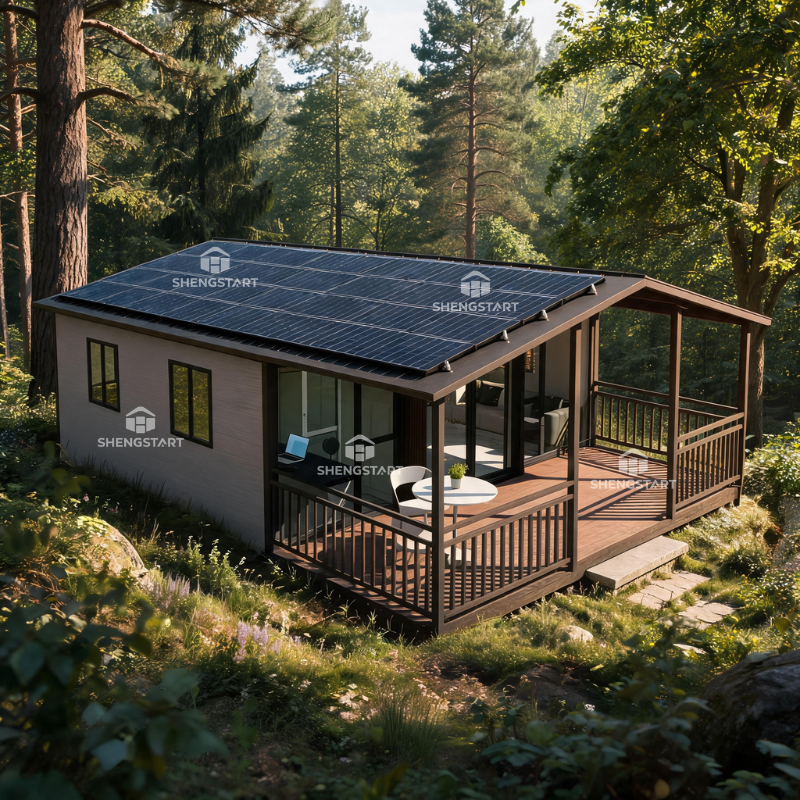
Solar Power Generation & Energy Storage System
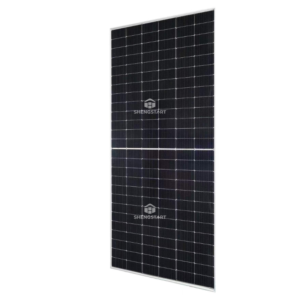
This is the foundation of off-grid living. Standard configurations include high-efficiency monocrystalline solar panels, lithium iron phosphate batteries, and inverters compatible with US 110V and European 220V electrical standards.
- For cold northern areas (Canada, Northern Germany): Low-temperature resistant batteries are equipped to ensure stable power supply in winter.
- For sunny southern regions (California, Spain, Italy): Large-capacity panel arrays support air conditioning, kitchen appliances, and heating equipment.
ShengStart pre-wires all circuit frameworks inside cabins in the factory, complying with US NEC and EU CE electrical codes to avoid local renovation troubles after delivery.
Rainwater Collection & Purification Circulation
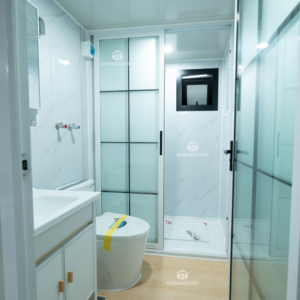
Rainwater is collected from roof gutters, filtered through multi-stage purification devices, and stored in underground water tanks. Treated water meets domestic standards for washing, showering, and drinking. This system is especially practical for remote lands without tap water access.
Wastewater & Sewage Treatment
Two eco-friendly options are available for buyers: portable compost toilets and mini sewage purification tanks. Both avoid sewage discharge pollution and align with strict environmental protection laws in EU countries and US rural protected areas.
Climate-Adapted Insulation for All Seasons
Off-grid homes must minimize energy consumption for heating and cooling. ShengStart applies different insulation materials based on regional climates:
- Cold zones (Northern US, Scandinavia): Thick PUinsulation + double-layer vacuum glass to lock indoor heat and reduce battery power loss in winter.
- Hot coastal zones (Florida, Southern France): Anti-UV exterior panels and thermal barrier layers block high outdoor temperatures, lowering air conditioner power consumption.
Off-Grid Container Cabin VS Traditional Off-Grid Wooden House
| Comparison Item | Off-Grid Container Cabin | Traditional Wooden Off-Grid Cabin |
| Construction Period | 1–3 days on-site installation | 3–6 months on-site construction |
| Initial Total Cost | 30%–50% lower | High raw material & labor cost |
| Anti-Corrosion & Wind Resistance | Galvanized steel frame, anti-rust coating; resists coastal salt fog & strong winds | Easy to rot, termite damage; weak against storms |
| Carbon Footprint | Recycled steel structure, low construction waste | Mass timber cutting generates large carbon emissions |
| Mobility | Can be relocated entirely with basic disassembly | Fixed building, unable to move |
| Maintenance Cycle | Minor inspection once per year | Repaint & anti-termite treatment every 2 years |
For most individual homeowners and glamping investors in the US and Europe, container cabins deliver better economic and environmental benefits in long-term operation.
Common Challenges When Buying Off-Grid Container Cabins
Many overseas buyers encounter obstacles when importing self-sufficient modular houses from China:
- The cabin’s internal wiring fails to meet local voltage and safety certification standards.
- Suppliers only provide bare steel shells without matching integrated off-grid systems, requiring extra costly local installation.
- Poor insulation leads to excessive power consumption of solar batteries, shortening service life.
- Lack of professional design guidance for regional climate adaptation.
As a professional modular building manufacturer with 10 years of export experience, ShengStart solves all the above pain points through one-stop factory customization. All off-grid cabins leave the factory with complete solar, water purification, and insulation systems pre-installed, fully certified for US and European markets.
Real Off-Grid Container Cabin Project Cases by ShengStart
Private Off-Grid Retreat in California, USA
A US customer purchased a 20ft expandable off-grid container cabin for mountain land use. ShengStart equipped a 5kW solar storage system, rainwater purification equipment, and cold-resistant PU insulation. The owner completely cut off municipal electricity and water, living comfortably all year round without utility bills.
Glamping Off-Grid Cabin Resort in Southwest France
A French tourism investor ordered 18 sets of flat-pack off-grid container cabins for rural glamping. All units complied with EU CE standards, fitted compost toilets and solar air conditioning. The resort opened within one month after delivery and gained great popularity among eco-travelers.
Is an Off-Grid Container Cabin Suitable for You?
Off-grid modular cabins perfectly fit these groups of buyers across the US and Europe:
- Private land owners who want a permanent holiday house far from cities;
- Glamping resort operators pursuing low operation costs and eco branding;
- Outdoor construction teams needing temporary self-sufficient offices and dormitories;
- Environmental enthusiasts advocating zero-carbon sustainable living;
- Remote ranch and farm owners without access to public utilities.
If you live in cold northern areas, hot southern coasts, or mountain forest zones, ShengStart can adjust insulation, solar power capacity, and water system configurations to match your local natural environment.
Conclusion
Driven by low-carbon policies, rising energy costs, and the booming eco-travel industry, off-grid container cabins will maintain sustained growth in the US and European markets throughout 2026 and beyond. Compared with traditional off-grid buildings, modular container cabins feature lower costs, faster installation, stronger environmental adaptability, and recyclable structures, making them the top choice for sustainable off-grid living.
As a certified Chinese container house factory, ShengStart integrates all off-grid supporting systems during production, fully complies with US NEC and EU CE standards, and provides exclusive climate customization solutions for buyers across North America and Europe. No extra local renovation work is needed after cabin delivery.
CTA
Want to build your own self-sufficient off-grid container cabin or launch an eco glamping project? Contact the ShengStart engineering team today to get a free customized layout design and detailed system cost breakdown. You can also download our free PDF guide: Complete Off-Grid Container Cabin Solution for US & Europe to learn more about solar matching, insulation selection and import cost tips.